
BU: Using Wearable Tech to Understand Heat Risk in Chelsea Workers

View Simple Case Study As urban temperatures rise, workers in cities face increasing heat stress, even in small businesses where air conditioning may be limited and ventilation inadequate. Chelsea, Massachusetts, is one of Boston’s most heat-vulnerable neighborhoods. Its dense housing, industrial areas, and minimal tree cover contribute to high summer temperatures that can put employees […]
SDSU Study: Wearable Tech Tracks Heat Stress in California Farmworkers

View Simple Case Study Researchers at San Diego State University (SDSU) are using wearable technology to better understand how extreme heat affects farmworkers in California’s Imperial Valley. Farm work is one of the most physically demanding jobs in the United States, and in this region, summer temperatures frequently exceed 110°F. These conditions create hazardous environments […]
Keeping Workers Safe in Extreme Heat: How SRMC Leveraged Wearable Technology

View Simple Case Study Read U.S. Department of Energy Article Working in high-temperature environments is inherently risky, especially for employees performing physically demanding tasks in full protective gear. At the Savannah River Mission Completion (SRMC) site in Aiken, South Carolina, summer temperatures regularly exceed 90°F, creating conditions where heat-related injuries are a serious concern. For […]
Building Future Firefighters Safely: Goodyear Fire Department Uses SlateSafety Wearables

View Simple Case Study Firefighting is one of the most physically demanding professions, requiring strength, endurance, and the ability to perform under extreme conditions. Preparing recruits for this career means training them in high-intensity environments while keeping safety front and center. The City of Goodyear Fire Department in Arizona recognized the importance of combining […]
Perrigo Raises the Bar for Heat Safety with SlateSafety Wearables

View Simple Case Study View NSC Case Study For employees working in manufacturing environments, heat stress is a serious occupational hazard. At Perrigo, a leading Irish-American manufacturer, workers produce pharmaceuticals and powdered infant formula under conditions where temperatures can rise quickly. Physically demanding tasks in these warm environments put employees at risk of heat-related illness, […]
How Wearable Safety Devices Enhance Worker Protection at the USACE Chambers Works Site
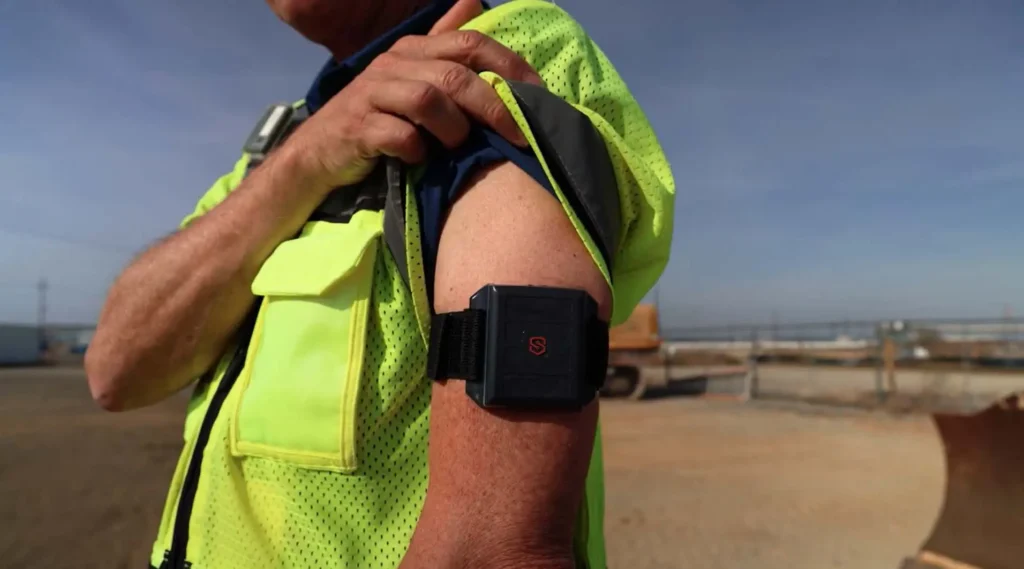
View Simple Case Study At the historic Chambers Works site in Southern New Jersey, the Philadelphia District United States Army Corps of Engineers (USACE) is spearheading a critical cleanup project tied to the Manhattan Project. Amidst this challenging environment, safety takes precedence, and innovation is at the forefront of their strategy. One standout initiative involves […]
Innovative Heat Stress Management at the Department of Energy’s Hanford Site

View Simple Case Study The Central Plateau Cleanup Company (CPCCo), based in Richland, Washington, is a contractor to the U.S. Department of Energy which plays a pivotal role in the safe and effective cleanup of legacy nuclear waste at the Hanford Site, a decommissioned nuclear production facility. There, heat stress safety for workers is a […]
SlateSafety BAND V2 Rated Best Physiological Monitoring System

A recent assessment conducted by the National Urban Security Technology Laboratory (NUSTL), which sits within the U.S. Department of Homeland Security (DHS) Science and Technology Directorate (S&T), rated the SlateSafety BAND V2 as the number one physiological monitoring system for first responders. In November of 2022 the NUSTL, Systems Assessment and Validation for Emergency Responders […]
US Army uses SlateSafety’s BAND V2 to prevent heat injuries at Best Sapper Competition 2023

View Simple Case Study Each year, the U.S. Army brings together the very best of the elite combat engineers, known as Sappers, to a single location for a multi-day competition of technical proficiency, mental agility, and physical endurance. This competition known as the Best Sapper Competition takes place at Fort Leonard Wood, Missouri and stands […]
Core Temperature Validation Study with the University of Alabama

The University of Alabama School of Nursing has recently published their findings from a study by Dr. Michael Callihan, PhD, RN, CEN, NRP and his team who investigated the usability of the SlateSafety wearable device for physiological monitoring. During the study physiological data was collected on a team of nurses performing job-specific tasks in a […]