

Read U.S. Department of Energy Article
Working in high-temperature environments is inherently risky, especially for employees performing physically demanding tasks in full protective gear. At the Savannah River Mission Completion (SRMC) site in Aiken, South Carolina, summer temperatures regularly exceed 90°F, creating conditions where heat-related injuries are a serious concern. For the SRMC team, safety isn’t just a priority; it’s a principle that guides every operational decision.
The Challenge of Heat Stress
Heat stress can affect anyone exposed to high temperatures for extended periods, but workers performing intense physical labor outdoors or in enclosed spaces with protective equipment are at the highest risk. Heat-related illnesses, ranging from mild heat exhaustion to life-threatening heat stroke, can escalate quickly, sometimes with little warning.
For SRMC, which operates as a Department of Energy liquid waste contractor at the Savannah River Site, ensuring worker safety in these conditions has always been a critical focus. Field teams are often required to wear personal protective equipment (PPE) that adds extra weight and limits heat dissipation, increasing the risk of physiological strain. Historically, safety measures relied on scheduled breaks, hydration policies, and supervisors’ experience to identify when workers might be in danger. While effective to an extent, this approach is inherently reactive, leaving room for incidents to occur before intervention.
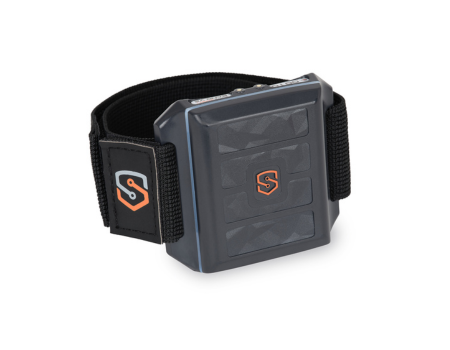
Integrating Wearable Technology
To take worker safety to the next level, SRMC implemented the SlateSafety BAND V2, a wearable physiological monitoring device designed to continuously measure core body temperature, heart rate, and overall heat strain in real time.
Workers wear the BAND V2 during shifts, allowing supervisors to monitor the physiological status remotely. The system provides real-time alerts if a worker’s readings approach set thresholds, giving supervisors the information needed to intervene before conditions become dangerous.
This integration represents a shift from reactive safety measures to a proactive, data-driven approach. By providing real-time insights into workers’ physiological state, SRMC can respond immediately, preventing heat stress before it escalates into an incident.
How the System Works in Practice
The BAND V2 monitors key physiological parameters, including but not limited to heart rate limit values (HRLV) and core temperature, comparing each worker’s current condition to safe thresholds. When a worker exceeds a set HRLV or their temperature approaches a high-risk level, which is customizable and set by the organization, the system then sends an instant alert to the supervisor’s dashboard.
Once alerted, supervisors can implement immediate interventions tailored to the individual worker’s needs. This may include:
- Providing additional rest breaks
- Ensuring adequate hydration
- Rotating tasks to reduce exertion
- Temporarily removing workers from high-heat areas
By acting on precise, real-time data, SRMC can protect workers efficiently without unnecessarily disrupting operations. Supervisors no longer have to rely solely on observation or guesswork; they have measurable, actionable data that informs each decision.
A Culture of Safety
In an article on the Department of Energy’s website, Wes Bryan, SRMC Environment, Safety, Health, and Quality Assurance Director, emphasized the importance of integrating technology into their safety culture:
“By integrating technologies like SlateSafety, we’re proactively protecting our team and making sure every worker goes home safely at the end of the day.”
This approach aligns with SRMC’s philosophy of safety as a guiding principle rather than just a set of rules. Wearable monitoring doesn’t replace traditional safety protocols; it enhances them, providing an additional layer of protection and ensuring that all workers are accounted for, even in extreme heat.
Results and Impact
The results speak volumes. During the monitored summer operations, SRMC reported no heat-related incidents among workers wearing the BAND V2. This outcome highlights the effectiveness of real-time monitoring in preventing heat stress injuries, even in some of the most challenging working conditions in the southeastern United States.
Safety and operational efficiency are not mutually exclusive. By using wearable technology, SRMC was able to maintain productivity while safeguarding employee health. Supervisors could manage workloads dynamically, ensuring that rest and recovery were implemented at the right times without overcompensating or halting operations unnecessarily.
Looking Forward
SRMC’s experience demonstrates the potential of wearable technology to transform workplace safety in high-risk environments. By providing supervisors with actionable insights, organizations can implement a proactive safety strategy that prevents injuries, increases awareness, and fosters confidence among workers that their well-being is a top priority.
The success of SRMC’s heat safety program also underscores a broader trend in industrial and field operations: leveraging data and technology to make safety measurable and manageable. Wearables like the SlateSafety BAND V2 are helping organizations move from reactive approaches to preventative, evidence-based safety programs.
In high-heat environments, the stakes are too high for guesswork. By embracing real-time physiological monitoring, SRMC has set a standard for worker safety that others can follow, ensuring that employees not only complete their missions but do so safely every day.